Chains
BNB Beacon Chain
BNB ecosystem’s staking & governance layer
Staking
Earn rewards by securing the network
Build
Explore
Accelerate
Connect
BNB Chain at Digital Asset Summit NYC
If you’ve been in crypto long enough, you’ve heard the RWA pitch before. Faster settlement, global access, markets that never close.
We were out at Digital Asset Summit in New York, and BNB Chain was part of a few of those conversations. Nina, our Executive Director of Growth, gave a keynote on moving from issuance to actual adoption, and Luke, our Head of BD, joined a panel on the institutional stack and how this all fits together.
Across both, the same thing kept coming up. Getting assets onchain isn’t really the problem anymore. The harder part is what happens after that.
The infrastructure isn’t the problem anymore
Traditional markets still operate with delays. Settlement can take anywhere from one to five days, and trading is limited to specific hours. That structure shapes how capital moves and who gets access.
Onchain, that flips pretty much every constraint. Settlement becomes sub-second and final, markets run 24/7, minimum investment drops from $10,000+ to as low as $1, and access is no longer limited by geography or intermediaries .
It also compresses the stack. Fewer intermediaries, lower operational costs, real-time transparency instead of monthly reporting, and composability where assets can actually be used in lending and collateral rather than sitting in isolated products.

The shift isn’t in the “why” anymore. It’s in what happens after.
The infrastructure needed to tokenize assets is already in place.
You have issuance covered: smart contract development, KYC/AML, auditable ownership.
You have settlement and custody: infrastructure to hold and move the underlying asset.
You have compliance and legal: structures that institutions are already using.
All of this already exists and is being used.
So the problem isn’t getting assets onchain.
It’s what happens once they’re there.
Once assets are onchain, what can users actually do with them?
That’s where things still break.
Distribution decides whether anything happens
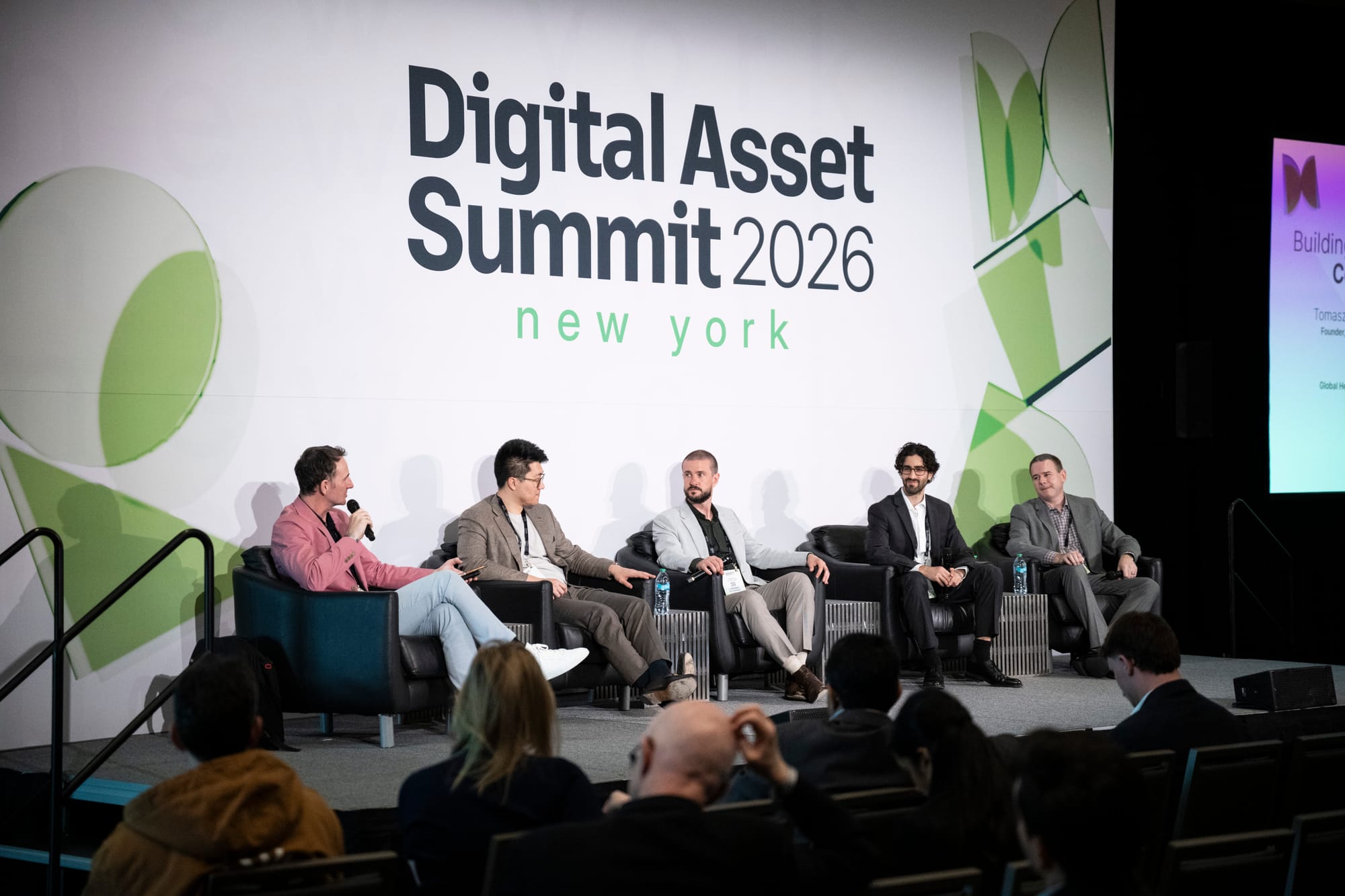
This came up again during Luke’s panel.
A lot of the conversation around RWAs still focuses on building the stack, but less on where these assets actually live once they’re issued. Luke brought it back to something simpler, pointing out that finance will move to where users already are, where they “transact, spend, transfer stablecoins… and have that activity base”.

That’s why distribution keeps coming up.
You can structure an asset perfectly, but if it lands somewhere with no liquidity, no users, and no real activity, it doesn’t go anywhere. It needs to enter an environment that already has movement.
This is where BNB Chain has a practical advantage. There’s around $17 billion in stablecoins on the network, with 58 million holders, and roughly $333 billion in transfer volume over 30 days, which is about 40% of global stablecoin transactions.
That isn’t passive capital sitting around. It’s being used for payments, trading, and moving liquidity across the ecosystem.
You’re not starting from zero, the activity is already there.
RWAs only matter when they have a role
The more useful way to look at this is how RWAs are actually used.
Collateral is the clearest example. Assets can be posted and used to borrow against, which immediately gives them a role inside DeFi, where you can “collateralize your real world asset and… borrow stablecoins against it”.

This is already happening at scale. On BNB Chain alone, there’s around $1.5 billion worth of RWAs locked in lending protocols, with roughly $300 million borrowed against them.
This is also where a lot of early institutional traction is showing up.
Stablecoins sit alongside this as the most widely adopted form of RWA. For most users, this is still the entry point.
Then there’s the trading side.
Nina pointed to commodities like gold and silver as natural fits because they already have volatility and demand. Tokenized equities are starting to follow a similar pattern, with over 250 tokenized stocks and indexes already live on BNB Chain, and a large share of that trading activity happening there.
The missing piece isn’t issuance, it’s fit
If you break the lifecycle down, issuance is largely solved.
BNB Chain alone already supports hundreds of different RWA types with +$3.3B in assets issued and over 42,000 holders actively interacting with them.
What matters is where those assets land.
Liquidity needs to be there. Users need access through wallets. Markets need to exist so assets can be priced and traded without friction.
BNB Chain, for example, operates with roughly 0.45 second block times, ~1 second finality, and up to 6,000 TPS, which supports both retail activity and more demanding institutional use cases .
That performance is paired with distribution through decentralized wallets like Trust Wallet, which brings access to hundreds of millions of users globally. That’s what makes them usable.
Where this is heading
RWAs are already being used as collateral, traded, and built into systems where capital moves.
The question isn’t whether an asset can be brought onchain. It’s whether it lands somewhere it can actually be used.
That’s where BNB Chain stands out: the users, the liquidity, and the activity are already there.
That’s what decides whether they go anywhere at all.