Chains
BNB Beacon Chain
BNB ecosystem’s staking & governance layer
Staking
Earn rewards by securing the network
Build
Explore
Accelerate
Connect
BNB Miami: Recap
BNB Chain brought builders, institutions, and ecosystem teams together in Miami for a day of panels, demos, and hackathon presentations. The conversations covered a lot, but most of it came back to the same thing: how onchain systems are starting to plug into real financial use cases, and where they still fall short.
Where BNB Chain Stands Today
The event opened with Luke, Head of BD at BNB Chain, setting the context for where the ecosystem is today and where it’s heading.

He walked through the current state:
- 800M+ wallets
- $18B+ in stablecoins
- 1,100+ deployed apps
- 40% of global stablecoin transaction volume
Those numbers matter because they show where activity is already concentrated, especially around payments and trading. The focus now is how that activity expands into areas like RWAs, AI-driven use cases, and more institutional participation.
Tokenized Assets Are Moving Into Real Use

The first panel brought together teams working across different types of tokenized assets:
- xStocks (tokenized equities, transferable 24/7, tradable 24/5
- Paimon (pre-IPO exposure to companies like SpaceX)
- Franklin Templeton (tokenized money market fund, “BENJI”)
The discussion stayed close to how these products actually behave once they’re in use, rather than getting stuck in theory.
Access came up early, as Val Guy (xStocks) put it:
“Providing access globally to something… blockchain is the ultimate tool to do that.”

You can see that playing out with tokenized equities and pre-IPO exposure, where users can now access markets that were previously limited by geography, regulation, or capital requirements.
What matters more is what happens after these assets are onchain.
They don’t just sit in a wallet. They can move across protocols, be used as collateral, or plugged into different strategies without leaving the system. Compared to traditional markets, where each of those steps is handled separately, everything sits much closer together.
Capital efficiency came up repeatedly, especially from the institutional side. As Rick from Franklin Templeton Digital Assets explained:
“You can send a token instantaneously and earn yield up to the second… that’s a powerful tool.”

Instead of capital sitting idle, it can stay in use, generating yield and moving between different use cases as needed. For institutions, that starts to look a lot closer to how they already think about managing liquidity, just without the usual delays and fragmentation.
Builders Are Tackling Core Gaps
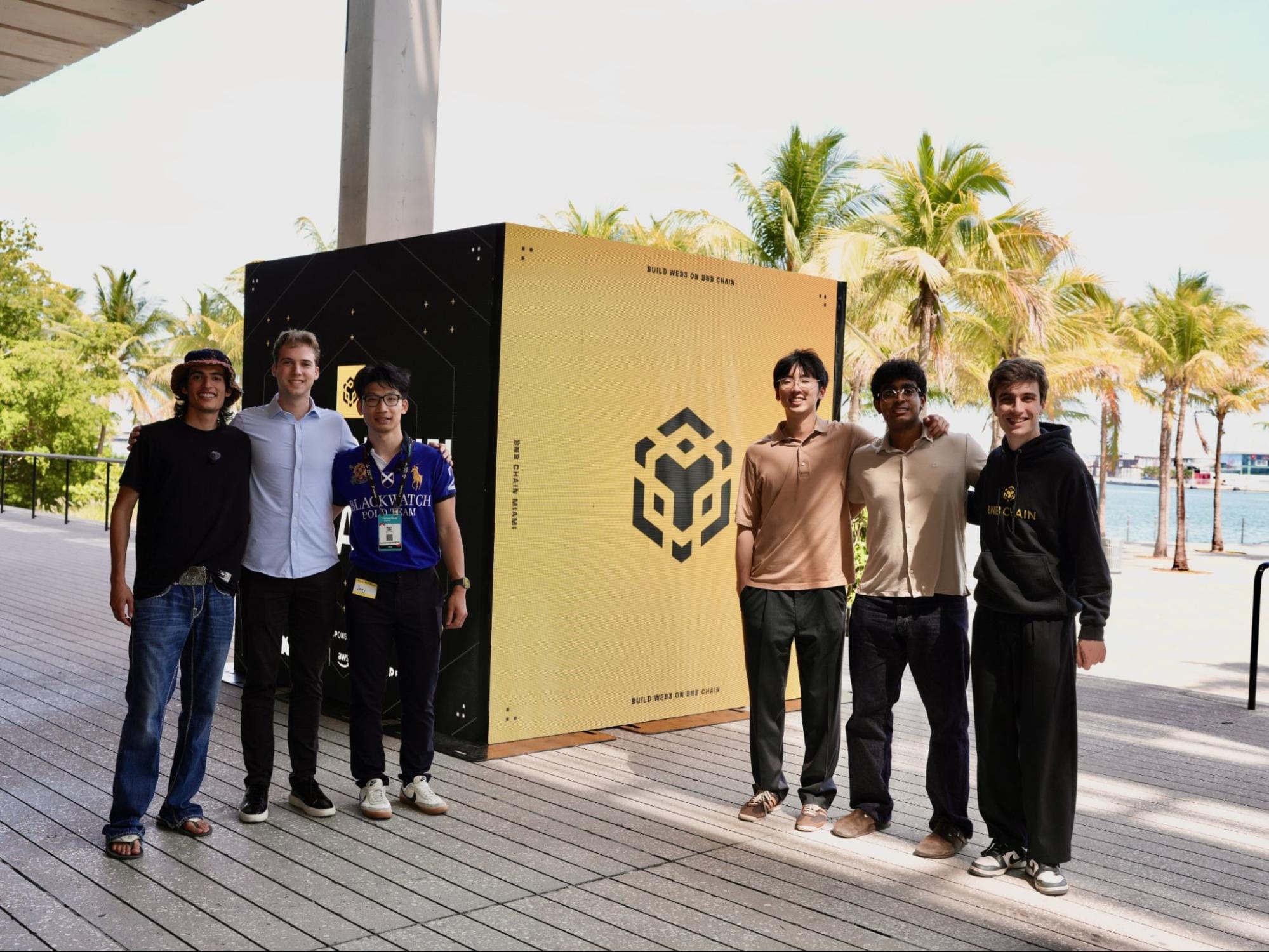
The hackathon segment focused on projects from the BNB Hack US College Edition, following a tour across universities including Stanford, Harvard, and NYU. The themes were AI, DeFi, and developer tooling.
The winning project, Credence, tackles one of the biggest limitations in DeFi lending.
Today, most protocols require users to overcollateralize, which limits who can realistically participate. Credence combines onchain data with offchain credit signals to move toward undercollateralized lending. If that approach works at scale, it opens lending to a much broader user base.
Other projects approached different problems:
- The Dojo built a marketplace where AI agents can train each other and be ranked based on performance, trying to introduce some structure and trust into a space that’s currently noisy.
- Messier focused on startup finance, using agents to track spending and flag unnecessary costs, essentially acting as a lightweight financial layer for early-stage teams.
Builders are moving toward problems that sit closer to real usage, like credit, coordination, and automation, rather than building around existing DeFi mechanics.
Infrastructure: What Still Needs Work

The second panel looked at infrastructure from different angles, with participants from:
- AWS (cloud and blockchain infrastructure)
- Genius (onchain trading terminal)
- Worldpay (payments infrastructure)
The discussion moved away from raw throughput and focused more on what makes these systems usable in practice.
From the AWS side, the point wasn’t that blockchains can’t scale. It’s that scaling alone doesn’t solve what institutions actually need. As Niall from AWS put it, the challenge goes beyond transaction speed and into everything around it:
“It’s more than just transaction throughput… access to blockchain data, wallet and custody, running nodes — all of that needs to meet institutional standards.”

That’s where most of the friction still sits. Setting up wallets, managing custody, accessing data, and integrating with protocols still takes more effort than it should. The demand is there, but the path to actually using these systems isn’t straightforward yet.
Stablecoins came up as the starting point for most institutions. Payments, treasury management, and cross-border transfers are already happening at scale. Once funds are onchain, the next step is figuring out how to use them more effectively, which is where DeFi starts to come in.
From the payments side, there’s still a gap between what exists today and what people are used to. As Ahmed from Worldpay explained:
“When you think about a credit card, it’s not just a payment tool… it offers protections, credit, all embedded in one experience.”

That layer doesn’t fully exist onchain yet. Things like credit, consumer protections, and risk management are built into traditional systems but don’t yet translate cleanly into crypto. That gap becomes more obvious as more non-crypto-native companies start to get involved.
Privacy also came up repeatedly, especially from trading and execution perspectives. Fully transparent systems don’t work well for larger players, but adding privacy while staying compliant is still an open problem.
Where Things Stand
Across the panels and demos, a few things are already clear.
Tokenized assets are being used inside DeFi, not just issued. Stablecoins are still driving most of the real activity, especially in payments. Builders are focusing on gaps like credit and automation, while institutions are starting to engage more seriously but still running into friction around usability and integration.
There’s progress, but also a clear set of problems that haven’t been solved yet.
If you want to be in the room for the next one, you can find upcoming BNB Chain events here: https://luma.com/BNBChainEvents