Chains
BNB Beacon Chain
BNB ecosystem’s staking & governance layer
Staking
Earn rewards by securing the network
Build
Explore
Accelerate
Connect
BSC Payment Lane: Reserved Blockspace That Keeps Payments Moving
TL;DR
- BSC Payment Lane reserves minimum block gas for payments during congestion, with launch planned for Q4 2026.
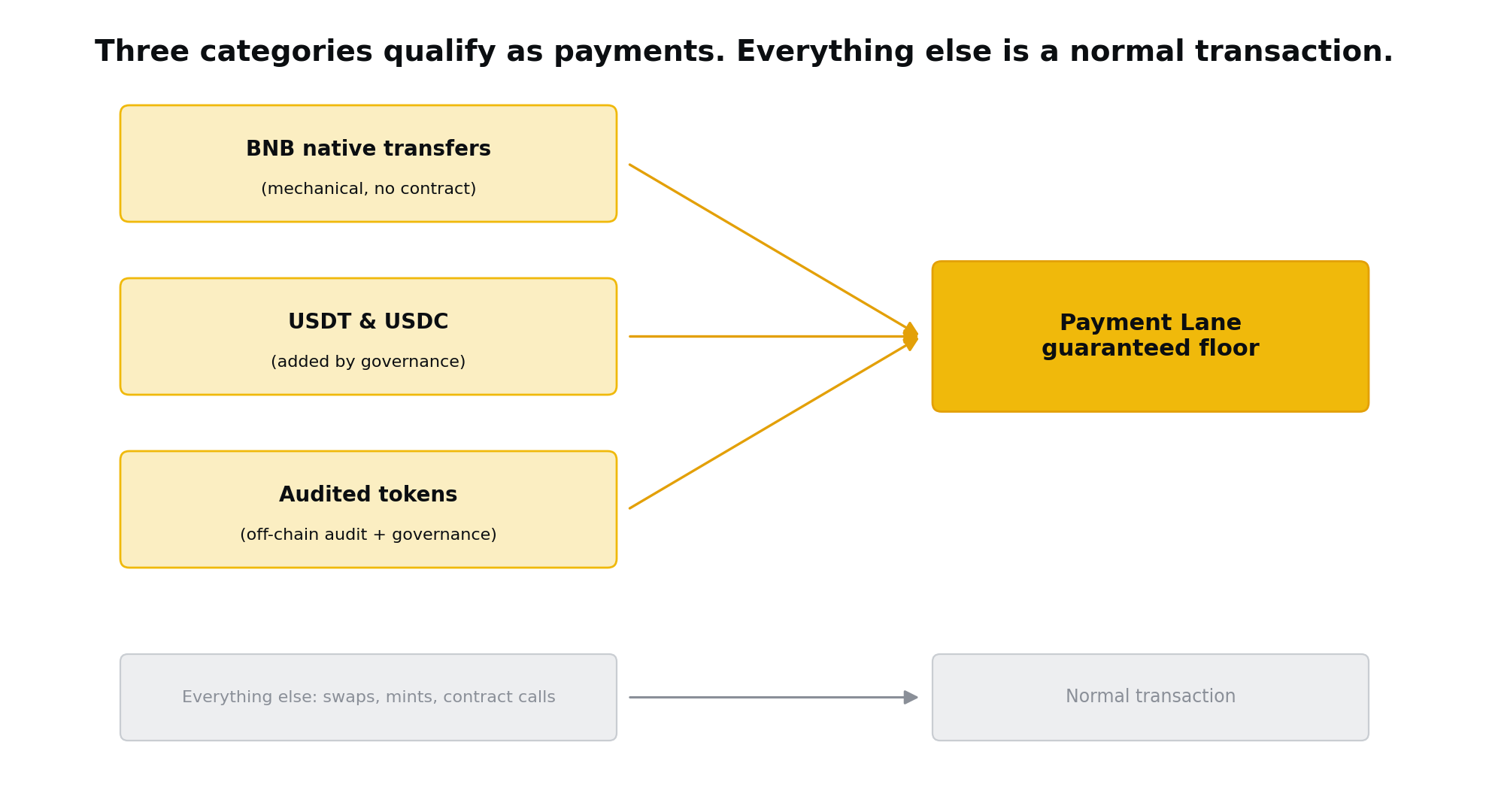
- The reserve expands when BSC is busy and shrinks when demand falls.
- Transaction ordering, decentralized exchange (DEX) swaps, and maximal extractable value (MEV) logic stay unchanged.
- Eligible payments include native BNB transfers, USDT, USDC, and audited tokens approved through governance.
BNB Smart Chain (BSC) orders transactions largely by priority fee, or tip. Higher tips generally move first.
That works under normal demand. During congestion, speculative activity can push tips higher and delay lower-value, time-sensitive payments such as withdrawals, remittances, and merchant transfers. Payment traffic appears in roughly 99.6% of BSC blocks. These transactions use relatively little gas, but delays matter.
BSC Payment Lane is designed to keep those payments moving during congestion without changing how the rest of the chain operates.
Why Payments Stall During Congestion
All transactions currently compete for the same blockspace.
When demand spikes, congestion from one activity affects everything else. A token launch can delay an exchange withdrawal or merchant payment even though those transactions are unrelated.
BSC is already increasing network capacity. Blocks have been sub-second since the Pasteur hardfork, with higher gas limits and further upgrades planned.
Payment Lane addresses a separate issue: how blockspace is shared during short periods of heavy demand.
How BSC Payment Lane Works
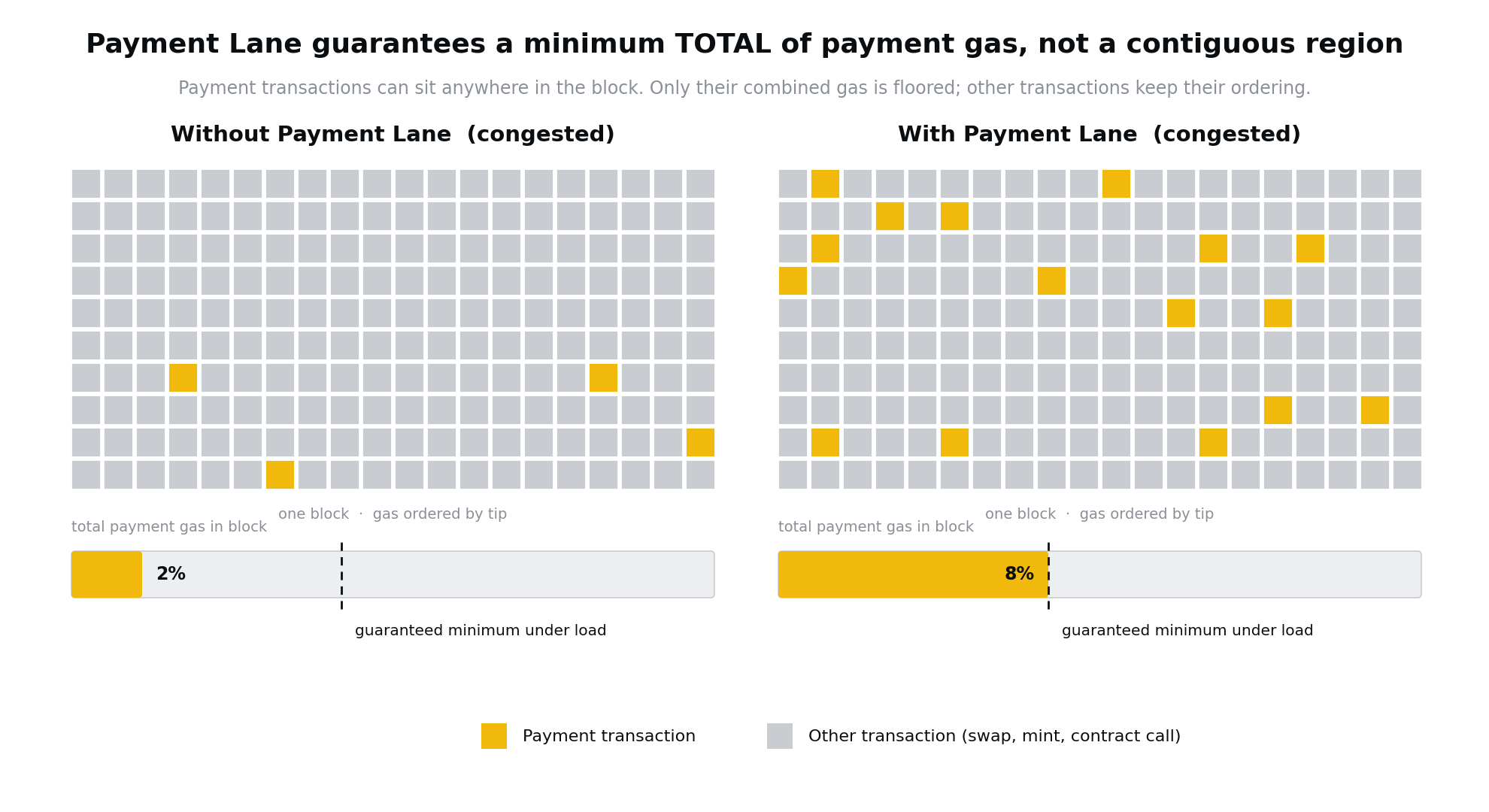
Payment Lane reserves a minimum amount of block gas for qualifying payments when BSC is congested.
Three properties define the mechanism:
- A floor, not a ceiling. Payments receive minimum guaranteed space but can use more and compete normally on tips.
- Dynamic. The reserve grows during congestion and shrinks as demand falls.
- Narrow by design. It applies only to value transfers. Tip ordering, swaps, and MEV remain unchanged.
The reserve is not a separate section of the block.
Payment transactions can appear anywhere. The protocol only ensures that their combined gas allowance, the PaymentGasLimit, does not fall below the configured minimum.
What Counts As A Payment
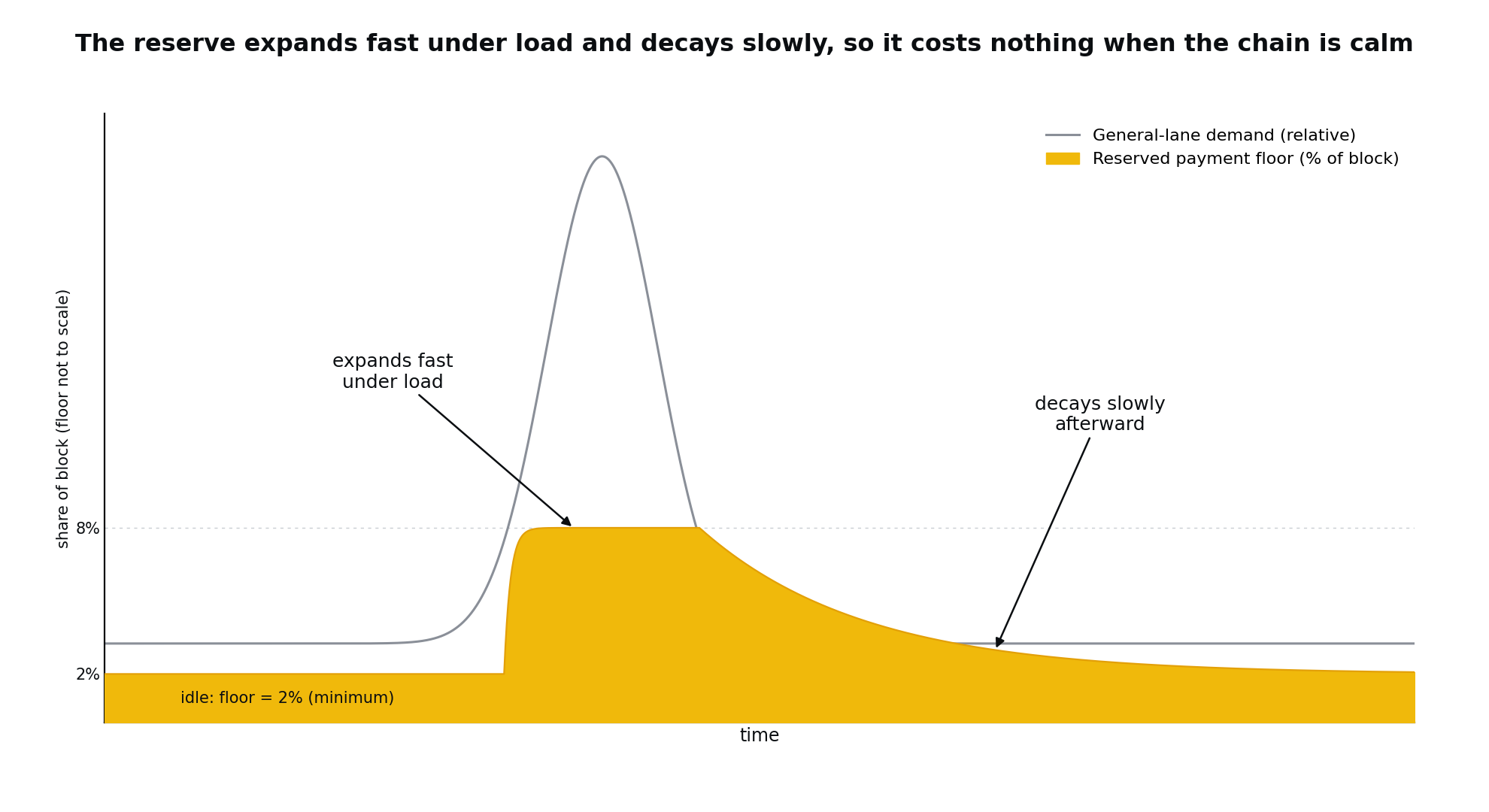
Three categories qualify:
- Native BNB transfers
- USDT and USDC
- Audited tokens approved through governance
Everything else remains a normal transaction. Users and wallets do not need to change anything and there is no new flag or transaction type.
Key Findings
The main result is straightforward: BSC can reserve minimum capacity for payments without introducing a new ordering system.
Priority fees still decide transaction order. DEX swaps continue to compete for blockspace normally, and existing MEV logic remains in place.
The economic effect is also limited. Outside congestion, fees and block rewards are unchanged.
During congestion, the reserve remains capped and payment transactions generally consume little gas.
The mechanism therefore targets one specific failure mode: payments being fully crowded out during demand spikes.
What This Means For You
Exchanges, wallets, remittance apps, and merchant tools get more reliable payment flows during congestion without integration changes.
Builders outside payments have nothing to update. Existing ordering, MEV, and fee assumptions remain intact.
Validators will vote on parameters including reserve size, congestion thresholds, and adjustment speed before launch.
What's Next
BSC Payment Lane is coming to BNB Smart Chain in Q4 2026.
Parameter proposals and integration notes will be published ahead of rollout, with governance voting completed before release.
Follow upcoming parameter proposals on the BNB Chain forum ahead of the Q4 2026 release.